Emergency Action & CPR: What Every Family Should Know Before Medical Help Arrives
Dr. Shadab Rauf Explains How Early Action Can Save a Life
By Dr. Shadab Rauf
MBBS, DNB, DM (Cardiology)
Interventional Cardiologist
Rauf Hospital – Multispeciality & Heart Care Center
Introduction:
A cardiac emergency does not always happen inside a hospital.
It may happen:
At home
During travel
At work
During sleep
In front of family members
In those first few minutes, immediate action matters more than people realize.
One of the biggest reasons patients lose valuable time is because people nearby are unsure:
“Should we wait?”
“Should we give water?”
“Should we move the patient?”
The truth is:
👉 Early recognition + early emergency response + CPR can save lives.
What Is a Cardiac Emergency?
A cardiac emergency occurs when the heart suddenly cannot maintain normal blood circulation.
Examples include:
Sudden Cardiac Arrest (SCA)
Severe Heart Attack
Dangerous heart rhythm disturbance (arrhythmia)
These conditions require immediate action.
What Is CPR?
CPR stands for:
Cardiopulmonary Resuscitation
It is an emergency technique performed when:
A person becomes unresponsive
Breathing stops or becomes abnormal
The heart stops pumping effectively
CPR helps maintain blood flow to:
🫀 Heart
🧠 Brain
🩸 Vital organs
until professional medical care arrives.
Emergency Warning Signs You Should Never Ignore
Call for emergency help immediately if someone has:
🚨 Sudden collapse
🚨 No response when spoken to
🚨 No normal breathing
🚨 Gasping breathing
🚨 Severe chest discomfort
🚨 Sudden unconsciousness
Time matters.
Emergency Action: What To Do First
Step 1 — Check Response
Ask loudly:
“Are you okay?”
If there is no response—
move to the next step.
Step 2 — Call Emergency Medical Services
Call emergency help immediately.
If another person is nearby:
👉 Ask them to arrange medical assistance while you stay with the patient.
Step 3 — Check Breathing
Observe:
Is the chest moving?
Is breathing normal?
If not—
start CPR.
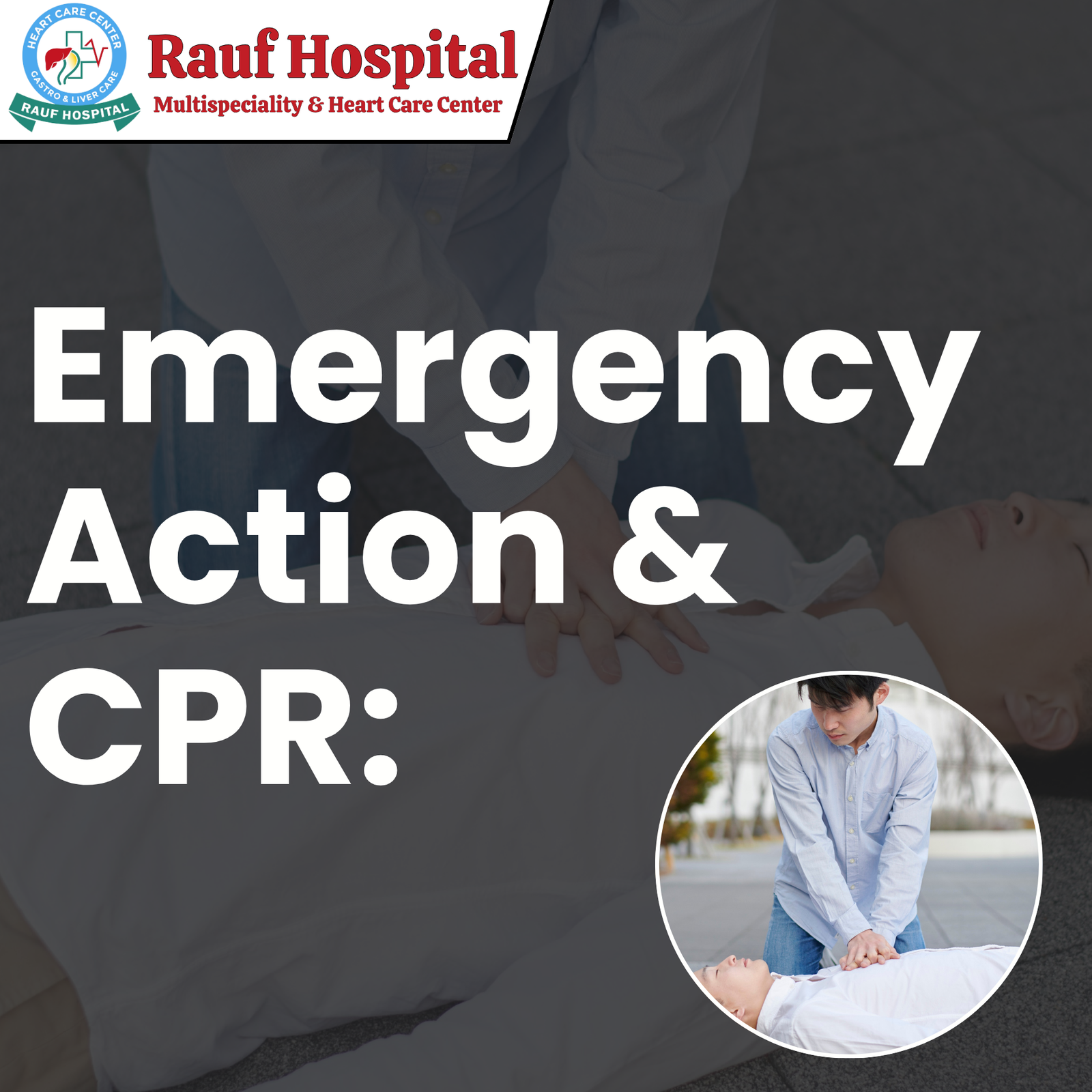
How to Perform Hands-Only CPR (Adults)
Position
Place the person flat on a hard surface.
Hand Placement
Place both hands in the center of the chest.
Compression Technique
Push:
✔ Hard
✔ Fast
✔ Allow full chest recoil
Maintain continuous chest compressions until professional help arrives.
What NOT To Do During Cardiac Emergency
❌ Do not force water
❌ Do not wait for the patient to recover spontaneously
❌ Do not crowd around the patient
❌ Do not delay medical help
Immediate action improves survival.
Can CPR Really Save Lives?
Yes.
Early CPR can:
Maintain oxygen supply
Support circulation temporarily
Improve survival chances significantly
This is why public awareness is critical.
Heart Attack vs Cardiac Arrest — They Are Not the Same
Heart Attack
Blood supply to heart is blocked.
Patient may remain conscious.
Cardiac Arrest
Heart suddenly stops pumping effectively.
Patient becomes unconscious.
Both require urgent medical attention.
Who Should Learn CPR?
Everyone should know basic emergency response, especially:
Family members of cardiac patients
Elderly caregivers
Office staff
Teachers
Frequent travelers
Because emergencies do not announce themselves.
Expert Insight – Dr. Shadab Rauf
“In cardiac emergencies, the first few minutes are extremely important. Early recognition and timely CPR can support circulation until advanced medical care becomes available.”
Emergency & Cardiac Care at Rauf Hospital
At Rauf Hospital – Multispeciality & Heart Care Center, we focus on:
✔ Emergency cardiac evaluation
✔ Heart rhythm assessment
✔ Critical care support
✔ Preventive cardiology
✔ Long-term cardiac management
Appointment & Contact Information
Rauf Hospital – Multispeciality & Heart Care Center
📍 Locations:
- Chhittanpura, Koyla Bazar, Varanasi
- Doodh Satti, Orderly Bazar, Varanasi
📞 Contact Numbers:
+91 99355 45456
+91 93365 19415
🫀 Services Available:
Emergency Cardiac Care • ECG • Echocardiography • Rhythm Monitoring • Preventive Cardiology
Final Thoughts:
Medical emergencies are unpredictable.
Knowing what to do in those first few minutes can make a real difference.
“Stay calm. Act early. Call for help. Early action saves lives.”