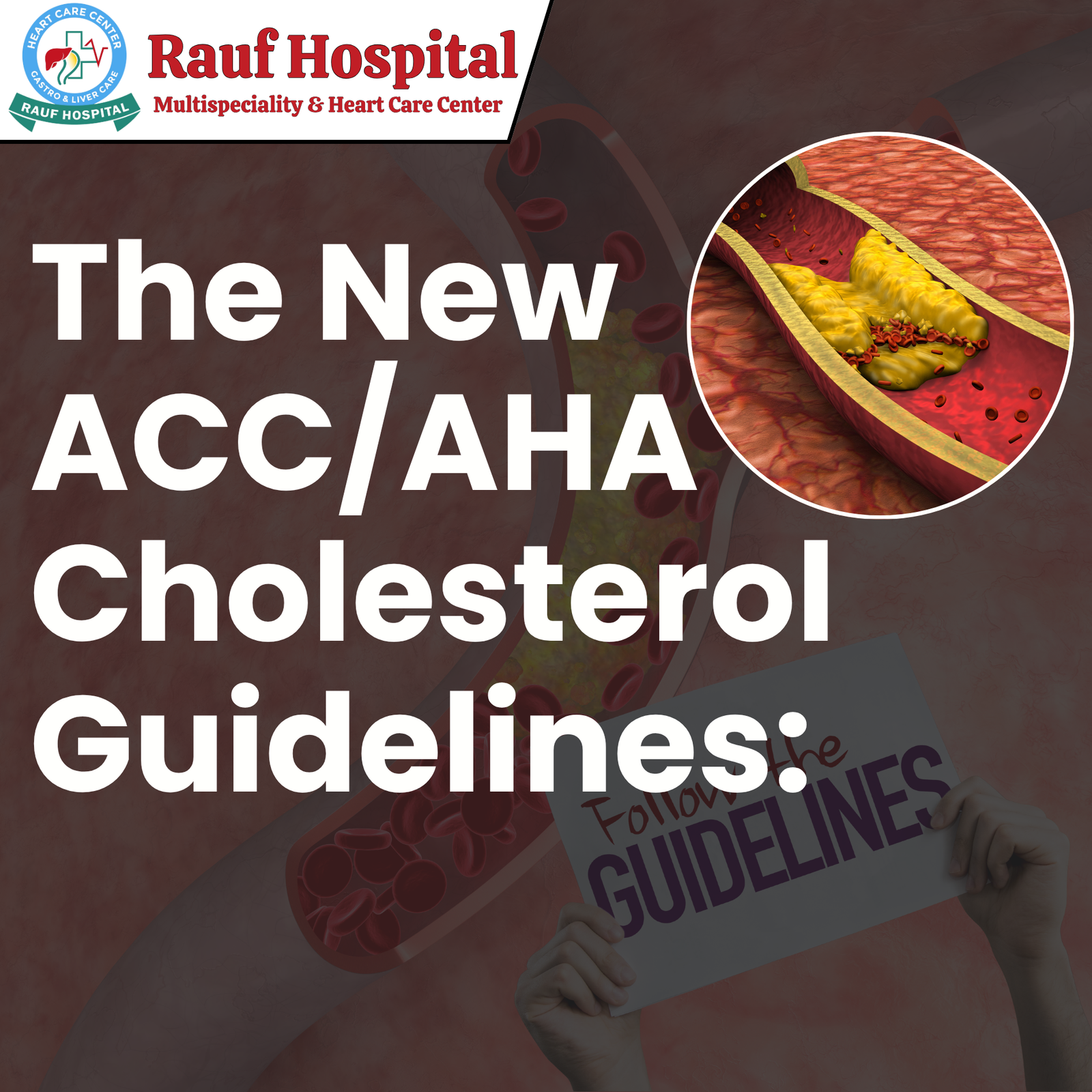
The New ACC/AHA Cholesterol Guidelines: What Changed and Why It Matters for Your Heart
Dr. Shadab Rauf Explains the Latest Approach to Cholesterol, LDL Targets & Heart Risk Prevention
By Dr. Shadab Rauf
MBBS, DNB, DM (Cardiology)
Interventional Cardiologist
Rauf Hospital – Multispeciality & Heart Care Center
Introduction:
For years, people have believed that cholesterol treatment starts only after reports become abnormal.
But modern cardiology is moving in a different direction:
👉 Prevent earlier. Treat smarter. Protect the heart before damage begins.
The recently updated ACC/AHA Cholesterol (Dyslipidemia) Guidelines bring a more personalized and prevention-focused approach to cholesterol management. These guidelines place stronger emphasis on early screening, cardiovascular risk assessment, LDL (“bad cholesterol”) targets, and timely treatment.
The biggest message is simple:
Don’t wait for symptoms to protect your heart.
First—What Is Cholesterol?
Cholesterol is a wax-like substance present naturally in the body and is important for normal cell function.
However, when certain cholesterol levels become elevated—especially LDL cholesterol (Low-Density Lipoprotein)—the risk of heart disease and stroke increases.
What Is New in the ACC/AHA Cholesterol Guidelines?
1️⃣ The Focus Has Shifted from “Treat Numbers” to “Treat Risk”
Earlier discussions often focused only on cholesterol values.
The updated guideline emphasizes:
Overall cardiovascular risk
Family history
Diabetes
Age
Lifestyle
Long-term prevention planning
The goal is not just lowering cholesterol—it is reducing future heart events.
2️⃣ LDL (“Bad Cholesterol”) Goals Are Back
One of the biggest updates:
The guideline now brings back specific LDL-C treatment goals based on patient risk.
Examples include:
Borderline / Intermediate Risk
Target LDL:
<100 mg/dL
High-Risk Patients
Target LDL:
<70 mg/dL
Very High-Risk Patients (existing heart disease)
Target LDL may be:
<55 mg/dL
This means treatment is becoming more individualized.
3️⃣ Earlier Screening Is Becoming More Important
The newer recommendations encourage earlier cholesterol assessment and more proactive prevention.
Because:
Heart disease is increasingly affecting younger adults.
4️⃣ Lifestyle Still Remains the Foundation
One important message remained unchanged:
Medication alone is not enough.
Lifestyle changes continue to play a central role:
✔ Regular exercise
✔ Weight management
✔ Better food choices
✔ Reduced processed food
✔ Smoking avoidance
5️⃣ Statins Continue to Be the Main Treatment
Statins remain the primary cholesterol-lowering treatment for many patients.
Modern guidelines continue to support:
Moderate-intensity statins
High-intensity statins in selected patients
Additional therapies when targets are not achieved
6️⃣ Additional Lipid Testing Is Becoming More Relevant
The updated recommendations also highlight situations where additional testing (such as ApoB or advanced lipid evaluation) may help refine cardiovascular risk assessment—especially in selected patients.
Why These Guidelines Matter for Indian Patients
This update is particularly important because:
Many patients:
Feel normal despite high cholesterol
Ignore family history
Wait for symptoms before testing
But cholesterol buildup can silently affect arteries for years.
This is especially important for people with:
Diabetes
High BP
Family history of heart disease
Obesity
Smoking history
Common Questions Patients Ask
“If my cholesterol is slightly high, do I need medicines?”
Not always. Risk assessment matters.
“Can lifestyle reverse cholesterol?”
Lifestyle helps significantly—but some patients still require treatment.
“If I feel normal, do I still need testing?”
Yes—because cholesterol often has no symptoms.
Expert Insight – Dr. Shadab Rauf
“The biggest change in modern cholesterol care is that we no longer wait for disease to appear. We evaluate risk early and aim to prevent future heart attacks and strokes before they happen.”
How We Approach Cholesterol Care at Rauf Hospital
At Rauf Hospital – Multispeciality & Heart Care Center, we focus on:
✔ Comprehensive cardiac risk assessment
✔ Cholesterol and lipid evaluation
✔ Personalized treatment planning
✔ Preventive cardiology
✔ Long-term heart protection
Appointment & Contact Information
Rauf Hospital – Multispeciality & Heart Care Center
📍 Locations:
- Chhittanpura, Koyla Bazar, Varanasi
- Doodh Satti, Orderly Bazar, Varanasi
📞 Contact Numbers:
+91 99355 45456
+91 93365 19415
🫀 Services Available:
Preventive Cardiology • ECG • Echocardiography • Lipid Evaluation • Heart Risk Assessment
Final Thoughts:
High cholesterol should not be viewed as just a lab number.
Modern heart care focuses on:
Early detection → Risk assessment → Prevention → Long-term protection
“The best heart treatment is often the one that prevents the problem from happening.”