Why Holter Monitoring Is Needed
When a Routine ECG Is Not Enough to Detect Hidden Heart Rhythm Problems
By Dr. Shadab Rauf
MBBS, DNB, DM (Cardiology)
Interventional Cardiologist
Rauf Hospital – Multispeciality & Heart Care Center
Introduction:
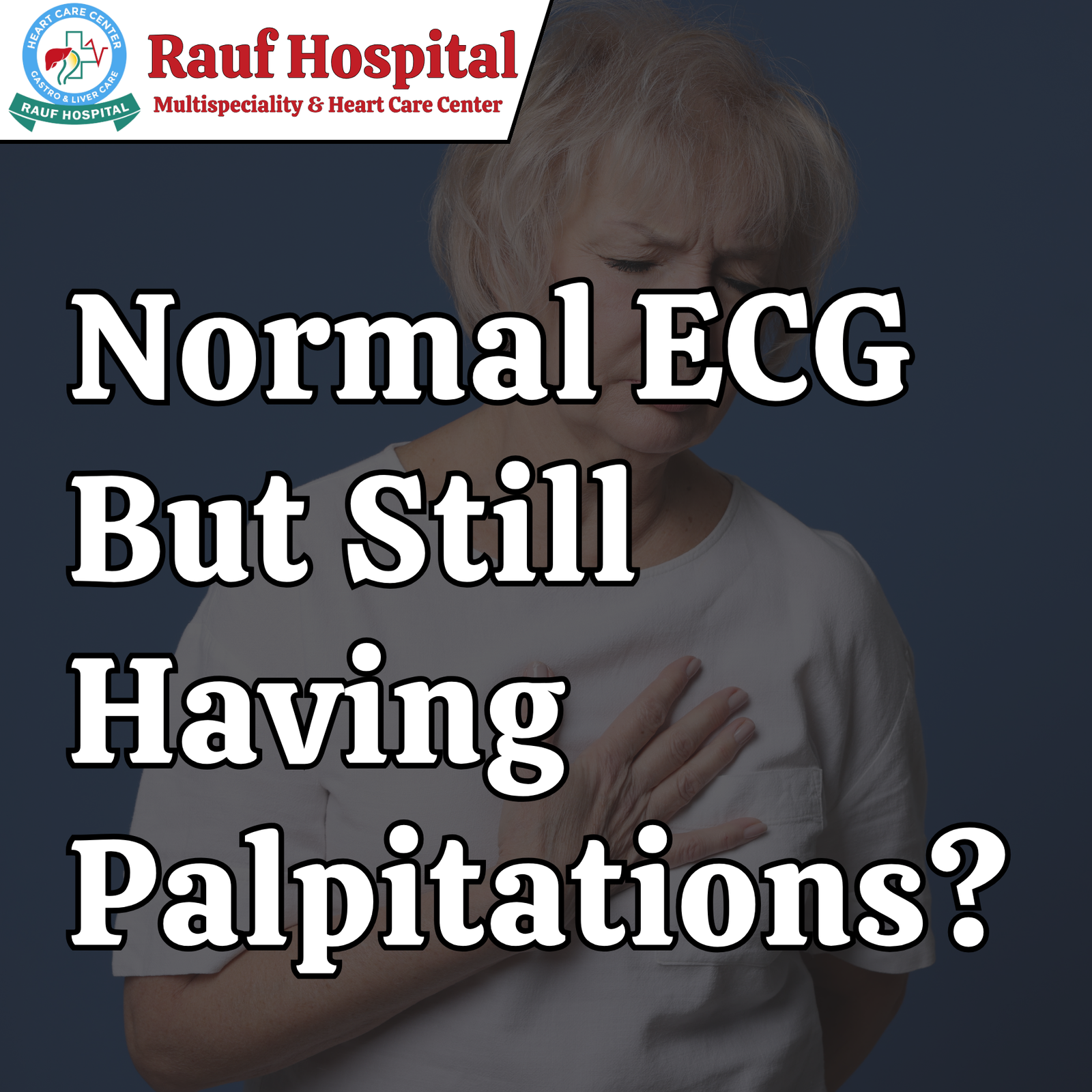
Many patients experience palpitations — a sensation of the heart racing, skipping beats, fluttering, or beating irregularly. Naturally, they undergo an ECG test. When the ECG report comes back normal, they feel reassured.
But the symptoms continue.
This is a common and important clinical scenario. A normal ECG does not always rule out heart rhythm disorders. In many cases, the abnormal rhythm simply did not occur during the few seconds when the ECG was recorded.
This is where Holter Monitoring becomes essential.
Why a Routine ECG May Miss the Problem
A standard ECG records the heart’s electrical activity for only 5–10 seconds. If your palpitations are:
Occasional
Intermittent
Occurring at night
Triggered by stress or exertion
they may not appear during that brief recording window.
Many arrhythmias (heart rhythm disorders) are episodic, meaning they come and go. If the episode does not happen during the ECG, the report will appear normal — even though the problem exists.
What Is Holter Monitoring?
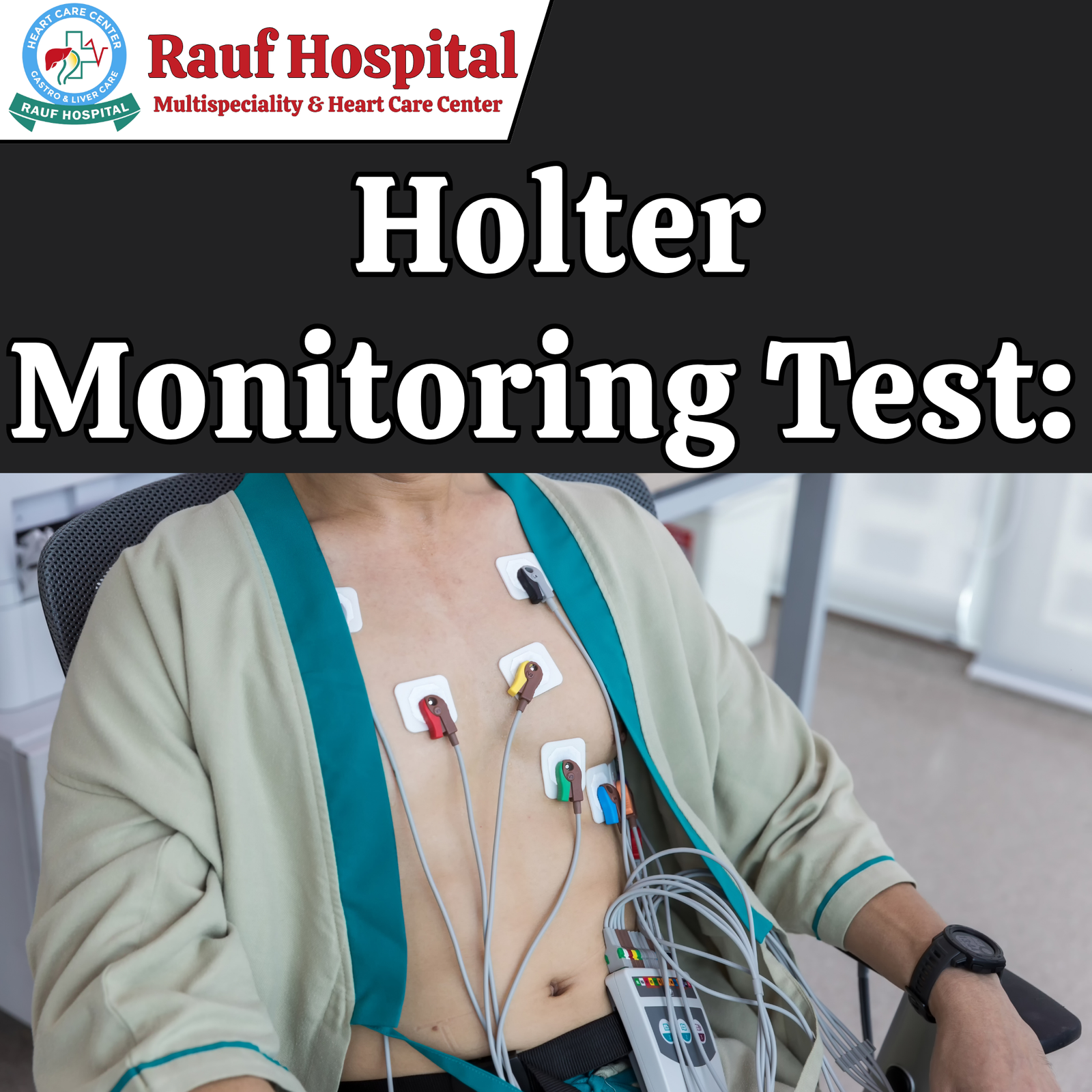
Holter Monitoring is a 24–48 hour continuous ECG recording using a portable device. It tracks your heart rhythm throughout:
Daily activities
Walking and exercise
Emotional stress
Sleep
Because it records continuously, it significantly increases the chance of detecting hidden rhythm abnormalities.
When Holter Monitoring Is Recommended
Holter monitoring is especially useful if you have:
Recurrent palpitations
Unexplained dizziness
Near-fainting or fainting episodes
Sudden racing heartbeat
Irregular pulse
Suspected atrial fibrillation
Symptoms despite normal ECG
It helps correlate symptoms with actual heart rhythm changes.
Conditions That Holter Monitoring Can Detect
Holter monitoring can identify:
🫀 Atrial Fibrillation (AF)
A major cause of stroke that may occur intermittently.
🫀 Supraventricular Tachycardia (SVT)
Sudden episodes of rapid heartbeat.
🫀 Premature Beats (PVCs / PACs)
Extra heartbeats that may cause skipped-beat sensations.
🫀 Bradycardia (Slow Heart Rate)
May cause dizziness or fatigue.
🫀 Silent Ischemia
Reduced blood flow without chest pain.
Early detection allows preventive treatment before complications develop.
Why Ignoring Persistent Palpitations Is Risky
If palpitations are ignored simply because ECG is normal, it may delay diagnosis of:
Stroke-causing arrhythmias
Heart muscle weakness
Conduction disorders
Sudden cardiac risk conditions
In preventive cardiology, early detection is critical.
How the Holter Test Is Performed
The procedure is simple and non-invasive:
Small electrodes are attached to the chest.
A lightweight portable monitor records heart activity.
The patient continues normal daily routine.
After 24–48 hours, data is analyzed by a cardiologist.
No hospital admission is required.
Who Should Consider Holter Monitoring Even If ECG Is Normal?
You should consider further rhythm evaluation if you have:
High blood pressure
Diabetes
Thyroid disorders
Family history of sudden cardiac death
Previous heart disease
Post-COVID palpitations
Recurrent unexplained dizziness
A normal ECG does not rule out intermittent arrhythmias.
Holter Monitoring at Rauf Hospital, Varanasi
At Rauf Hospital – Multispeciality & Heart Care Center, Holter monitoring is performed with:
Accurate rhythm interpretation
Expert cardiology supervision
Correlation of symptoms with rhythm changes
Personalized treatment planning
Patients receive detailed counseling and long-term heart health guidance.
Expert Insight – Dr. Shadab Rauf
“A normal ECG provides only a snapshot of heart rhythm.
If symptoms persist, extended monitoring is necessary.
Holter monitoring often reveals abnormalities that routine ECG cannot capture.”
When Should You Seek Immediate Evaluation?
Consult a cardiologist urgently if palpitations are associated with:
Dizziness or fainting
Breathlessness
Chest discomfort
Sudden weakness
Irregular pulse
Early rhythm diagnosis can prevent serious complications.
Book a Cardiology Consultation
Rauf Hospital – Multispeciality & Heart Care Center
📍 Locations:
- Chhittanpura, Koyla Bazar, Varanasi
- Doodh Satti, Orderly Bazar, Varanasi
📞 Contact Numbers:
+91 99355 45456
+91 93365 19415
🫀 Services Available:
Holter Monitoring • ECG • Echocardiography • Arrhythmia Evaluation • Preventive Cardiology • Interventional Cardiology
Final Thoughts:
If your ECG is normal but your symptoms are not, do not ignore them.
Palpitations deserve proper evaluation — and sometimes, a few seconds of ECG is simply not enough.
Continuous monitoring today can prevent stroke, heart failure, and sudden cardiac events tomorrow.
“Your symptoms matter — even when your ECG looks normal.”
Why Holter Monitoring Is Needed
When a Routine ECG Is Not Enough to Detect Hidden Heart Rhythm Problems
By Dr. Shadab Rauf
MBBS, DNB, DM (Cardiology)
Interventional Cardiologist
Rauf Hospital – Multispeciality & Heart Care Center
Introduction:
Many patients experience palpitations — a sensation of the heart racing, skipping beats, fluttering, or beating irregularly. Naturally, they undergo an ECG test. When the ECG report comes back normal, they feel reassured.
But the symptoms continue.
This is a common and important clinical scenario. A normal ECG does not always rule out heart rhythm disorders. In many cases, the abnormal rhythm simply did not occur during the few seconds when the ECG was recorded.
This is where Holter Monitoring becomes essential.
Why a Routine ECG May Miss the Problem
A standard ECG records the heart’s electrical activity for only 5–10 seconds. If your palpitations are:
Occasional
Intermittent
Occurring at night
Triggered by stress or exertion
they may not appear during that brief recording window.
Many arrhythmias (heart rhythm disorders) are episodic, meaning they come and go. If the episode does not happen during the ECG, the report will appear normal — even though the problem exists.
What Is Holter Monitoring?
Holter Monitoring is a 24–48 hour continuous ECG recording using a portable device. It tracks your heart rhythm throughout:
Daily activities
Walking and exercise
Emotional stress
Sleep
Because it records continuously, it significantly increases the chance of detecting hidden rhythm abnormalities.
When Holter Monitoring Is Recommended
Holter monitoring is especially useful if you have:
Recurrent palpitations
Unexplained dizziness
Near-fainting or fainting episodes
Sudden racing heartbeat
Irregular pulse
Suspected atrial fibrillation
Symptoms despite normal ECG
It helps correlate symptoms with actual heart rhythm changes.
Conditions That Holter Monitoring Can Detect
Holter monitoring can identify:
🫀 Atrial Fibrillation (AF)
A major cause of stroke that may occur intermittently.
🫀 Supraventricular Tachycardia (SVT)
Sudden episodes of rapid heartbeat.
🫀 Premature Beats (PVCs / PACs)
Extra heartbeats that may cause skipped-beat sensations.
🫀 Bradycardia (Slow Heart Rate)
May cause dizziness or fatigue.
🫀 Silent Ischemia
Reduced blood flow without chest pain.
Early detection allows preventive treatment before complications develop.
Why Ignoring Persistent Palpitations Is Risky
If palpitations are ignored simply because ECG is normal, it may delay diagnosis of:
Stroke-causing arrhythmias
Heart muscle weakness
Conduction disorders
Sudden cardiac risk conditions
In preventive cardiology, early detection is critical.
How the Holter Test Is Performed
The procedure is simple and non-invasive:
Small electrodes are attached to the chest.
A lightweight portable monitor records heart activity.
The patient continues normal daily routine.
After 24–48 hours, data is analyzed by a cardiologist.
No hospital admission is required.
Who Should Consider Holter Monitoring Even If ECG Is Normal?
You should consider further rhythm evaluation if you have:
High blood pressure
Diabetes
Thyroid disorders
Family history of sudden cardiac death
Previous heart disease
Post-COVID palpitations
Recurrent unexplained dizziness
A normal ECG does not rule out intermittent arrhythmias.
Holter Monitoring at Rauf Hospital, Varanasi
At Rauf Hospital – Multispeciality & Heart Care Center, Holter monitoring is performed with:
Accurate rhythm interpretation
Expert cardiology supervision
Correlation of symptoms with rhythm changes
Personalized treatment planning
Patients receive detailed counseling and long-term heart health guidance.
Expert Insight – Dr. Shadab Rauf
“A normal ECG provides only a snapshot of heart rhythm.
If symptoms persist, extended monitoring is necessary.
Holter monitoring often reveals abnormalities that routine ECG cannot capture.”
When Should You Seek Immediate Evaluation?
Consult a cardiologist urgently if palpitations are associated with:
Dizziness or fainting
Breathlessness
Chest discomfort
Sudden weakness
Irregular pulse
Early rhythm diagnosis can prevent serious complications.
Book a Cardiology Consultation
Rauf Hospital – Multispeciality & Heart Care Center
📍 Locations:
- Chhittanpura, Koyla Bazar, Varanasi
- Doodh Satti, Orderly Bazar, Varanasi
📞 Contact Numbers:
+91 99355 45456
+91 93365 19415
🫀 Services Available:
Holter Monitoring • ECG • Echocardiography • Arrhythmia Evaluation • Preventive Cardiology • Interventional Cardiology
Final Thoughts:
If your ECG is normal but your symptoms are not, do not ignore them.
Palpitations deserve proper evaluation — and sometimes, a few seconds of ECG is simply not enough.
Continuous monitoring today can prevent stroke, heart failure, and sudden cardiac events tomorrow.
“Your symptoms matter — even when your ECG looks normal.”