Why 24-Hour Heart Rhythm Monitoring Can Save Lives
Continuous ECG Recording for Accurate Detection of Hidden Heart Problems
By Dr. Shadab Rauf
MBBS, DNB, DM (Cardiology)
Interventional Cardiologist
Rauf Hospital – Multispeciality & Heart Care Center
Introduction:
Many heart rhythm problems do not appear during a routine ECG. A patient may experience palpitations, dizziness, fainting spells, or irregular heartbeat — yet the standard ECG report appears normal.
This is where the Holter Monitoring Test becomes crucial.
A Holter monitor records your heart’s electrical activity continuously for 24 to 48 hours (or longer), helping detect rhythm disturbances that may be missed during short ECG recordings.
For patients in Varanasi experiencing unexplained palpitations or recurrent dizziness, Holter monitoring often provides life-saving clarity.
What Is a Holter Monitoring Test?
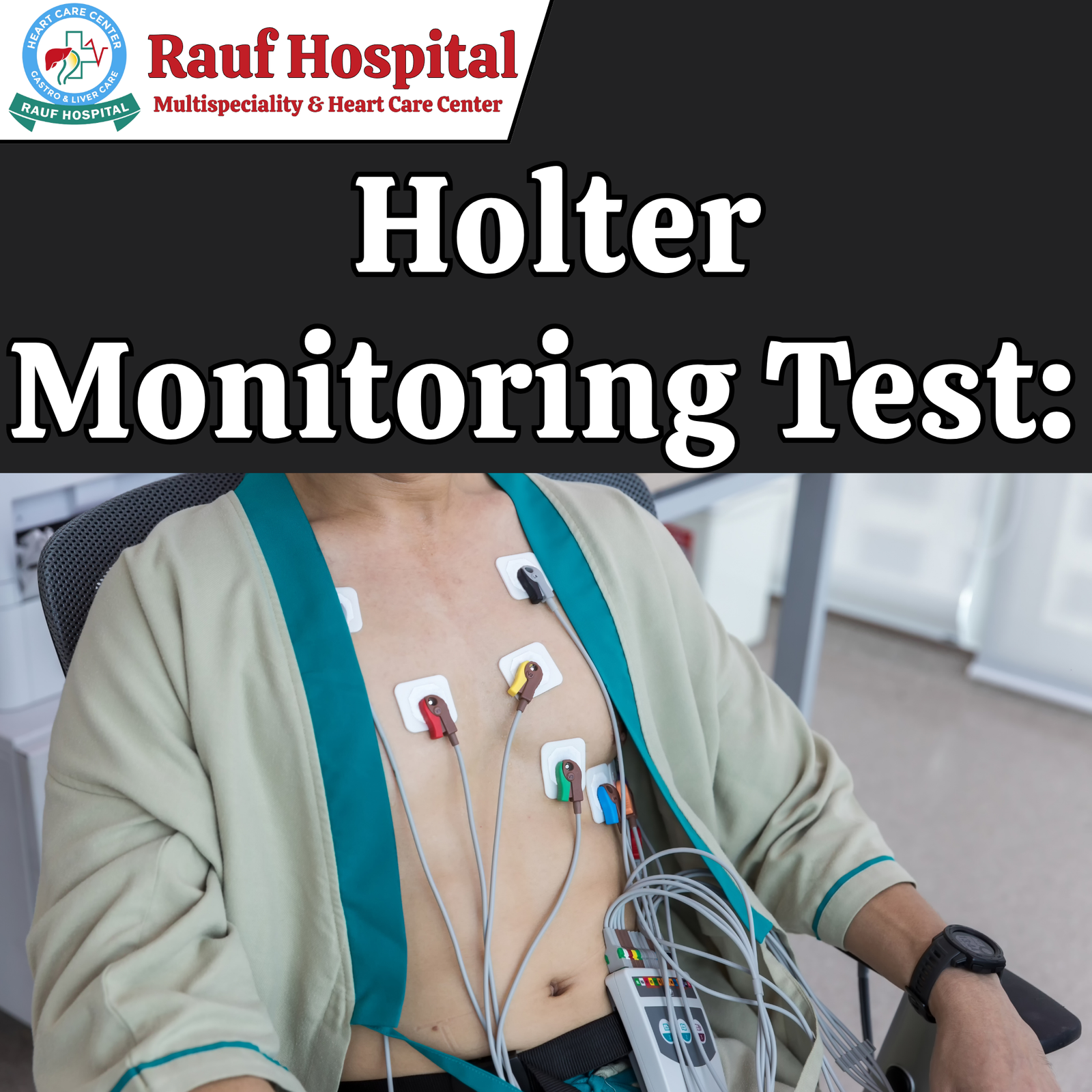
A Holter Monitoring Test is a portable, continuous ECG recording device worn for 24 hours or more. It tracks the heart’s rhythm throughout daily activities and sleep.
Unlike a standard ECG (which records only a few seconds), Holter monitoring captures:
Intermittent arrhythmias
Sudden heart rate changes
Silent rhythm abnormalities
Irregular heartbeats during sleep
It is one of the most effective tools for diagnosing hidden heart rhythm disorders.
When Is a Holter Test Recommended?
Your cardiologist may advise Holter monitoring if you experience:
Recurrent palpitations
Unexplained dizziness
Near-fainting or fainting episodes
Irregular pulse
Suspected atrial fibrillation
Sudden episodes of rapid heartbeat
Slow heart rate (bradycardia)
Post-heart attack rhythm monitoring
It is especially useful when symptoms occur intermittently and do not show on routine ECG.
Conditions Detected by Holter Monitoring
Holter monitoring helps diagnose:
🫀 Atrial Fibrillation (AF)
Irregular rhythm that increases stroke risk.
🫀 Supraventricular Tachycardia (SVT)
Sudden episodes of rapid heartbeat.
🫀 Ventricular Arrhythmias
Potentially serious rhythm disturbances.
🫀 Bradycardia (Slow Heart Rate)
May indicate conduction system disease.
🫀 Silent Ischemia
Reduced blood flow to the heart without chest pain.
Early detection allows timely medical intervention.
How the Holter Monitoring Test Is Done
The test is simple and non-invasive:
Small electrodes are attached to the chest.
A portable recording device is connected.
The patient continues normal daily activities.
The device records heart rhythm continuously.
After 24–48 hours, the data is analyzed by a cardiologist.
The procedure is painless and does not require hospital admission.
Why a Normal ECG Does Not Always Mean a Healthy Heart
Many rhythm disorders are episodic. If they do not occur during the few seconds of a routine ECG, they remain undetected.
Holter monitoring increases diagnostic accuracy by capturing:
Night-time arrhythmias
Stress-related rhythm changes
Intermittent conduction blocks
Symptom-correlated rhythm abnormalities
This makes it a vital tool in preventive cardiology.
Who Should Consider Holter Monitoring?
You may benefit from Holter monitoring if you have:
High blood pressure
Diabetes
Previous heart disease
History of stroke
Post-COVID cardiac symptoms
Family history of sudden cardiac death
Early rhythm evaluation prevents serious complications.
Why Timely Rhythm Diagnosis Is Important
Undiagnosed arrhythmias can lead to:
Stroke
Heart failure
Sudden cardiac arrest
Recurrent fainting episodes
Reduced quality of life
Holter monitoring allows early treatment before complications develop.
Holter Monitoring at Rauf Hospital, Varanasi
At Rauf Hospital – Multispeciality & Heart Care Center, Holter monitoring is performed with:
Accurate rhythm analysis
Expert cardiology interpretation
Personalized treatment planning
Evidence-based cardiac care
Patients receive detailed explanation of results and long-term heart health guidance.
Expert Insight – Dr. Shadab Rauf
“Many serious rhythm disorders are silent and intermittent.
Holter monitoring allows us to capture hidden abnormalities that routine ECG may miss.
Early detection significantly reduces the risk of stroke and sudden cardiac events.”
When Should You Consult Immediately?
Do not delay cardiology evaluation if you experience:
Frequent palpitations
Sudden dizziness
Blackout episodes
Irregular heartbeat
Breathlessness without clear cause
Holter monitoring may provide the answers.
Book Your Cardiology Consultation
Rauf Hospital – Multispeciality & Heart Care Center
📍 Locations:
- Chhittanpura, Koyla Bazar, Varanasi
- Doodh Satti, Orderly Bazar, Varanasi
📞 Contact Numbers:
+91 99355 45456
+91 93365 19415
🫀 Services Available:
Holter Monitoring • ECG • Echocardiography • Heart Rhythm Assessment • BP Control • Preventive Cardiology • Interventional Cardiology
Final Thoughts:
Heart rhythm problems are not always visible on a routine ECG.
If you have unexplained palpitations or dizziness, Holter Monitoring Test can detect hidden cardiac abnormalities early and prevent serious complications.
“Continuous monitoring today can prevent emergencies tomorrow.”