Advanced Cardiac Evaluation Explained
By Dr. Shadab Rauf
MBBS, DNB, DM (Cardiology)
Interventional Cardiologist
Rauf Hospital – Multispecialty & Heart Care Center
Introduction:
One of the most common misconceptions among patients is:
“My ECG is normal, so my heart must be healthy.”
Unfortunately, this assumption can be dangerous.
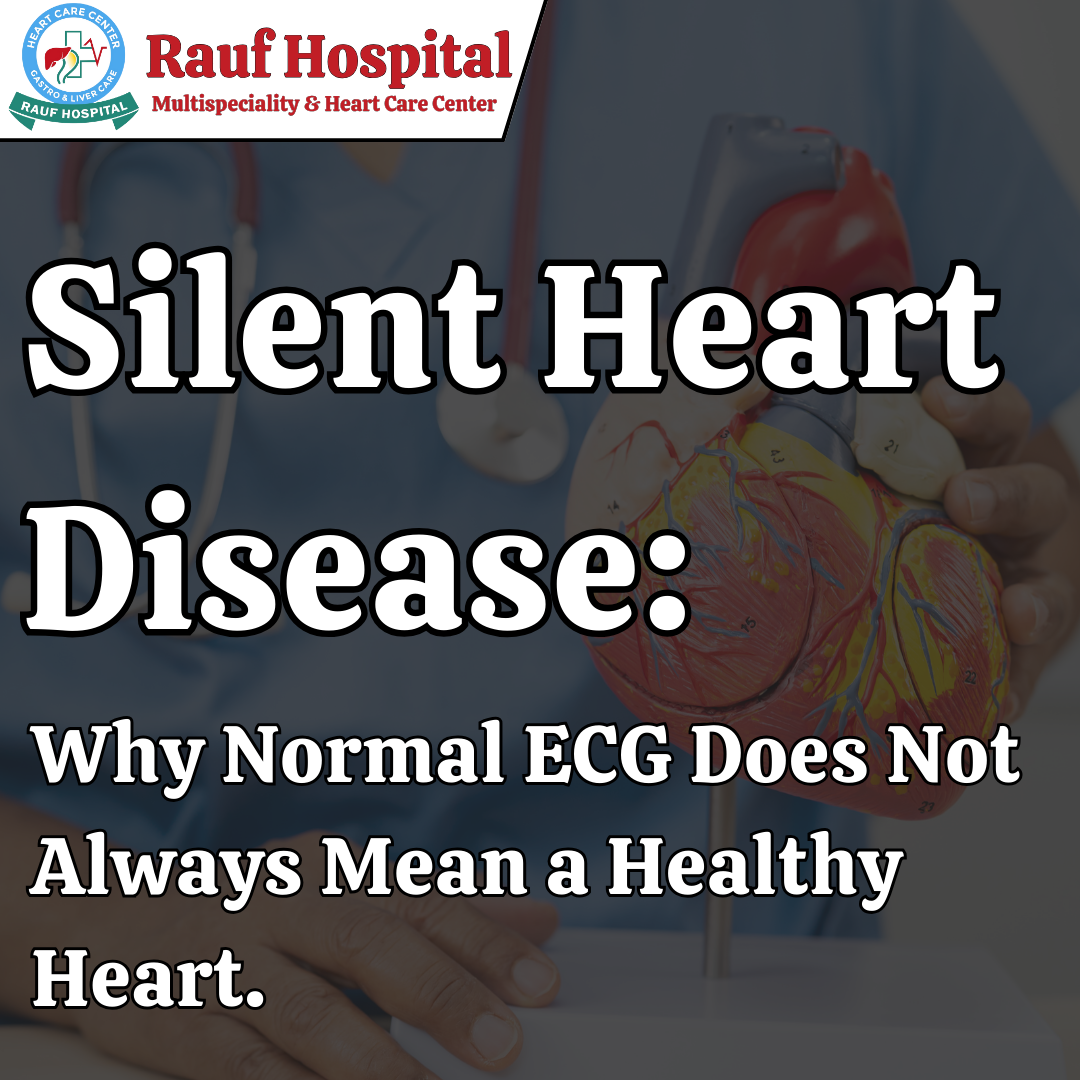
In daily cardiology practice, many patients in Varanasi are diagnosed with significant heart disease despite having a normal ECG. This condition is known as silent heart disease, where cardiac problems progress quietly—without obvious symptoms or abnormal routine test results.
Understanding the limitations of ECG and the importance of advanced cardiac evaluation can prevent heart attacks, heart failure, and sudden cardiac events.
What Is Silent Heart Disease?
Silent heart disease refers to cardiac conditions that develop without classic symptoms like severe chest pain and may not be detected by basic tests such as ECG.
Patients may feel:
Mild fatigue
Occasional breathlessness
Reduced stamina
No symptoms at all
Yet, underlying problems like blocked arteries or early heart muscle dysfunction may already be present.
Why a Normal ECG Does Not Guarantee a Healthy Heart
An ECG records the electrical activity of the heart at a specific moment in time. While it is a valuable tool, it has important limitations.
A normal ECG:
Does not always detect blocked coronary arteries
May miss early heart muscle weakness
Cannot reliably identify silent ischemia
May appear normal between episodes of rhythm problems
Many serious heart conditions can exist even when ECG readings are normal.
Heart Conditions That May Be Missed on a Normal ECG
🫀 1. Early Coronary Artery Disease
Blocked or narrowed arteries may not cause ECG changes until blood flow becomes critically reduced or a heart attack occurs.
🫀 2. Silent Ischemia (Reduced Blood Flow Without Pain)
Common in diabetics and elderly patients, where the heart muscle suffers from reduced oxygen without chest pain or ECG changes.
🫀 3. Early Heart Failure
In early stages, heart pumping function may decline gradually while ECG remains normal.
🫀 4. Intermittent Heart Rhythm Disorders
Some arrhythmias occur occasionally and may not be captured during a routine ECG.
🫀 5. Valve-Related Heart Disease
Mild to moderate valve problems often require imaging tests rather than ECG for diagnosis.
Who Is at Higher Risk of Silent Heart Disease?
You may have silent heart disease if you have:
Diabetes
High blood pressure
High cholesterol
Family history of heart disease
Smoking or tobacco use
Obesity or sedentary lifestyle
History of COVID-related cardiac symptoms
In these individuals, normal ECG results should never lead to complacency.
Symptoms That Should Raise Concern Even with a Normal ECG
Seek cardiology evaluation if you experience:
Breathlessness on walking
Unexplained fatigue
Chest heaviness or discomfort
Palpitations
Dizziness or near-fainting
Reduced exercise tolerance
These symptoms may indicate underlying heart disease despite normal ECG findings.
Advanced Cardiac Evaluation: Looking Beyond ECG
To accurately assess heart health, cardiologists use advanced diagnostic tools, including:
✅ Echocardiography
Evaluates heart muscle strength, valve function, and pumping efficiency.
✅ Stress Testing / TMT
Detects reduced blood flow during physical exertion.
✅ Risk Profiling
Assessment of BP, sugar, cholesterol, lifestyle, and family history.
✅ Advanced Imaging or Monitoring (When Required)
Helps identify hidden or intermittent cardiac problems.
These tests provide a complete picture of heart health, not just electrical activity.
Importance of Preventive Cardiology
Preventive cardiology focuses on:
Detecting disease before symptoms worsen
Controlling risk factors early
Preventing heart attack, stroke, and heart failure
Protecting long-term heart function
Early intervention often avoids emergency situations.
Patient-Centric Cardiac Care at Rauf Hospital
At Rauf Hospital – Multispeciality & Heart Care Center, patients benefit from:
Comprehensive heart evaluation beyond routine ECG
Ethical, evidence-based treatment
Emergency cardiac care when required
Long-term heart health planning
This structured and transparent approach is why many patients trust care associated with the best interventional cardiologist in Varanasi – Dr. Shadab Rauf.
Expert Insight – Dr. Shadab Rauf
“A normal ECG does not always mean a normal heart.
Silent heart disease is common, especially in high-risk patients.
Advanced evaluation helps detect problems early—before a heart attack occurs.”
When Should You Consult a Cardiologist Despite a Normal ECG?
Do not delay if:
Symptoms persist or worsen
You have diabetes, BP, or cholesterol issues
Family history of heart disease exists
Fatigue or breathlessness affects daily life
Early consultation can prevent irreversible heart damage.
Appointment & Contact Information
Rauf Hospital – Multispeciality & Heart Care Center
📍 Locations:
- Chhittanpura, Koyla Bazar, Varanasi
- Doodh Satti, Orderly Bazar, Varanasi
📞 Contact Numbers:
+91 99355 45456
+91 93365 19415
🫀 Services Available:
Advanced Cardiac Evaluation • ECG • Echocardiography • Stress Testing • Preventive Cardiology • Heart Disease Risk Assessment
Final Thoughts:
A normal ECG is reassuring—but not definitive.
Silent heart disease can progress unnoticed until a major event occurs.
Listening to symptoms and seeking advanced cardiac evaluation can save lives.
“Don’t trust one test—trust a complete heart evaluation.”