authored by Dr. Shadab Rauf (Cardiologist, Rauf Hospital, Varanasi) —
in the same style and format as your Amrit Dental and BMV blogs, complete with hospital and doctor details, call-to-action, and friendly yet expert tone.
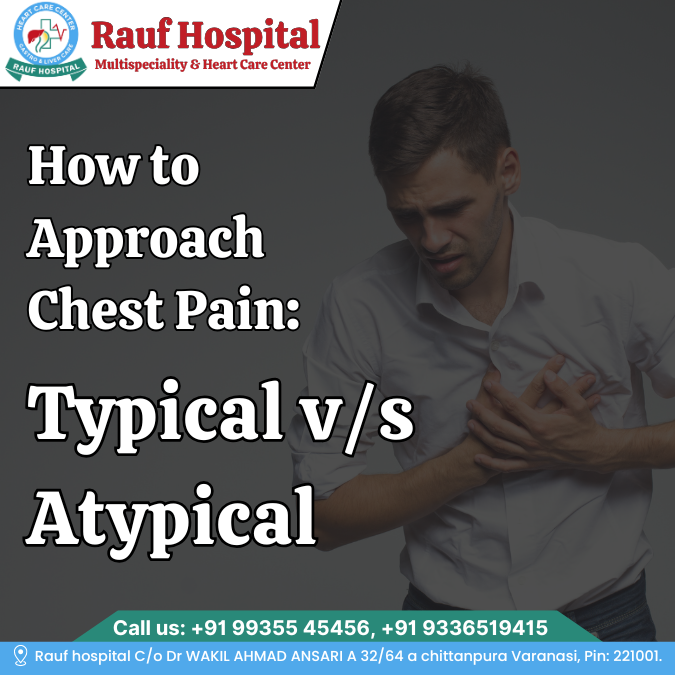
🫀 How to Approach Chest Pain — Typical vs Atypical
By Dr. Shadab Rauf | Consultant Cardiologist, Rauf Hospital, Varanasi
Chest pain — even mild — can be one of the most frightening and confusing symptoms a person experiences. While not every chest pain means a heart attack, it’s never something to ignore.
Understanding whether the pain is typical (cardiac-related) or atypical (non-cardiac or less classical) helps patients and doctors act quickly and safely.
In this blog, Dr. Shadab Rauf, leading Cardiologist at Rauf Hospital, Varanasi, explains in simple terms how to identify the type of chest pain, when to worry, and what steps to take for timely treatment.
❤️ What Does “Typical” Chest Pain Mean?
Typical chest pain (angina) usually has three defining features:
Location: Felt in the center of the chest — behind the breastbone — and may radiate to the left arm, jaw, shoulder, or neck.
Trigger: Occurs during physical activity or emotional stress, when the heart needs more oxygen.
Relief: Subsides within a few minutes of rest or nitroglycerin.
If all three are present, it’s called Typical Angina — most likely due to Coronary Artery Disease (CAD), where arteries supplying the heart become narrow.
🩺 Example: A middle-aged man feels heavy chest pressure while climbing stairs that eases with rest — this is typical angina.
💬 What Is “Atypical” Chest Pain?
Atypical chest pain does not follow the usual pattern. It might:
Feel sharp, stabbing, or burning instead of heavy or tight.
Be localized (you can point to the spot).
Change with breathing or posture.
Last for hours instead of minutes.
Occur at rest or without exertion.
Atypical chest pain is often due to non-cardiac causes like:
Muscle or rib inflammation
Gastric reflux or acidity
Anxiety and panic attacks
Lung infections or pleurisy
However, note this carefully — not all atypical pain is harmless.
In women, diabetics, and elderly patients, heart-related pain often appears “atypical” — as tiredness, shoulder pain, or mild discomfort rather than crushing chest pressure.
🔍 How Doctors Approach Chest Pain – Step-by-Step
At Rauf Hospital, we follow a systematic evaluation for every chest pain case — because every minute counts.
1️⃣ Detailed Medical History
When did the pain start?
What triggers it — exertion, rest, meals, stress?
Does it radiate to the arm, jaw, or back?
Any nausea, breathlessness, or sweating?
Any known risk factors like diabetes, hypertension, or smoking?
2️⃣ Physical Examination
Blood pressure, pulse, oxygen levels.
Heart and lung sounds.
Checking if pain changes on pressing the chest wall (suggests muscular cause).
3️⃣ Diagnostic Tests
At Rauf Hospital, we have advanced cardiac diagnostic facilities:
ECG (Electrocardiogram): Detects immediate heart rhythm or ischemic changes.
Cardiac Troponin Test: Confirms or rules out heart attack.
2D ECHO and TMT: To evaluate heart function and blockages.
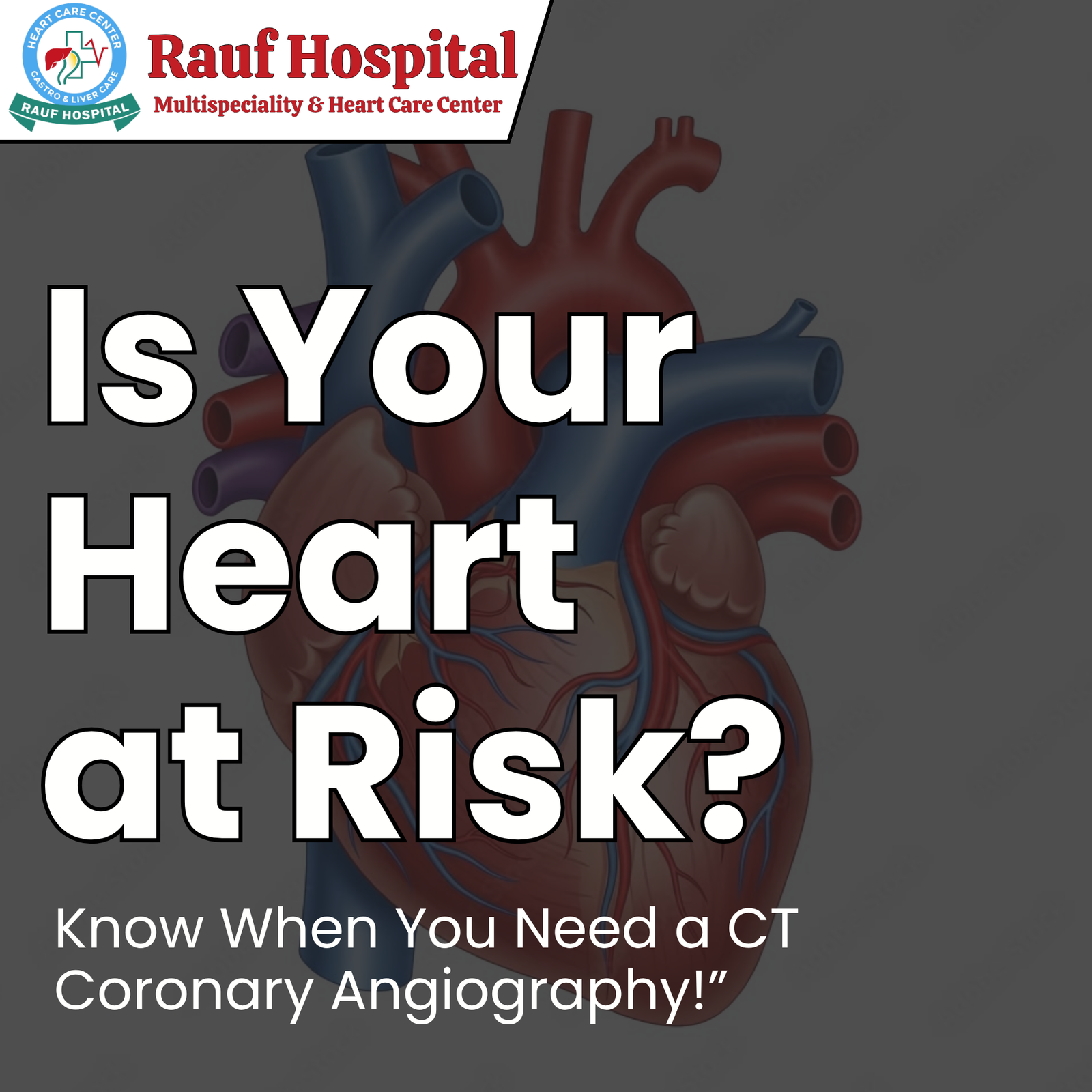
CT Coronary Angiography / Angiography: For precise assessment of coronary arteries.
If the pain is non-cardiac, additional tests like X-ray, endoscopy, or ultrasound are recommended.
🚨 Warning Signs You Should Never Ignore
Call emergency or rush to Rauf Hospital, Varanasi immediately if you experience:
Chest pain with shortness of breath or sweating
Pain radiating to arm, jaw, or back
Heaviness or pressure-like sensation lasting > 15 minutes
Pain accompanied by nausea, dizziness, or fainting
Sudden tearing pain in chest or upper back (may indicate aortic dissection)
These symptoms could indicate a heart attack or another life-threatening condition.
🌿 Managing & Preventing Chest Pain
Even if your pain turns out to be non-cardiac, prevention is always better.
Dr. Shadab Rauf recommends:
Quit smoking completely 🚭
Eat heart-healthy meals (low oil, high fiber) 🥗
Keep BP, sugar, and cholesterol under control
Exercise regularly — at least 30 minutes brisk walk daily 🏃♂️
Avoid unnecessary stress
Get a regular heart check-up every 6–12 months
🏥 Why Choose Rauf Hospital, Varanasi
Rauf Hospital is one of the leading centers for advanced cardiac care and diagnostics in Eastern Uttar Pradesh.
Led by Dr. Shadab Rauf (MBBS, MD, DM – Cardiology), the hospital provides complete heart-care solutions — from preventive checkups to emergency interventions.
Specialized Services:
✅ 24×7 Emergency & ICU Care
✅ ECG, ECHO, TMT, Holter Monitoring
✅ Angiography & Angioplasty
✅ Balloon Mitral Valvotomy (BMV)
✅ Pacemaker & Stent Implantation
✅ Hypertension & Heart Failure Management
Our mission is simple — “Compassion with Competence” — ensuring every patient receives world-class cardiac care at an affordable cost.
📍 Location: Rauf Hospital, Varanasi
📞 Call: +91 9935545456, 9336519415
🌐 Follow: @raufhospital
💡 Conclusion
Chest pain is not always a heart attack — but it always deserves attention.
Whether typical or atypical, timely evaluation can save lives.
Dr. Shadab Rauf and the expert team at Rauf Hospital urge everyone:
“Never ignore chest pain. Let’s find the cause before it finds you.”
Visit Rauf Hospital, Varanasi for your cardiac screening or consultation today — because your heart deserves the best care. ❤️
🔍 SEO Keywords
Chest Pain Varanasi | Best Cardiologist in Varanasi | Dr Shadab Rauf | Rauf Hospital Heart Care | Typical vs Atypical Chest Pain | Heart Attack Symptoms | Chest Pain Diagnosis | Non-Surgical Heart Treatment | Cardiology Clinic Varanasi